
Charities in Twitter storm over balloon releases
24 May 2012
Charities are being urged to abandon balloon releases in a Twitter a campaign.
Venturesome, CAF’s social investment fund, has published a paper aimed at finding common agreement on the language used to describe social enterprises.
The paper outlines three different business models of social enterprise.
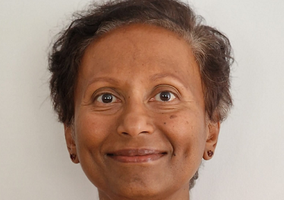
John Kingston (pictured), Venturesome’s director, said: “To attract and retain more social investors we need to use a common language.
“More and more people are talking about themselves as social enterprises but this means different things to different people.
“The interest is positive but there is now a need for clarity about the different types of organisation trading to achieve positive social impact.
“We don’t see any of these models as better than the others. We have designed them to help create clarity which is important if they are to be successful as each model requires different management capabilities and different types of investment.”
The first model includes enterprises operating a profit-making trading activity that has no direct social impact but gives some, or all of their profit to a charity, for example the trading subsidiaries of charities, companies which promise to give a percentage of their profits to charitable projects, or a hedge fund which gives a slice of its profits to a charitable foundation, eg. the Children’s Investment Fund.
The second model includes enterprises operating trading activities that have a direct social impact but manage a trade-off between producing a financial return and social impact, such as fair trade businesses or microfinance funds.
The third covers enterprises engaging in a trading activity that not only has a direct social impact but also generates a financial return in direct correlation to the social impact created. This might include windfarms or farmers’ markets.
Authors Paul Cheng and Joe Ludlow conclude that no particular model is inherently more profitable than another.
“We also believe that no particular model is inherently more socially impactful than any other. Each model is merely a means to an end, and not an end in itself.
“As such, every social enterprise should ultimately be judged on its actual impact.”
The Office of the Third Sector estimates that there are over 55,000 social enterprises in the UK generating a turnover in excess of £27bn and contributing £8bn a year to GDP.
Conflicts of interest beset social enterprises
Social enterprise gets unit in DCLG
Social enterprise kitemark set to boost sector
Coalition challenges Venturesome's social enterprise definitions
CAF courses to teach foreign millionaires how to give
Lack of interest in social enterprise kitemark
Push for cooperatives to get on board with Social Enterprise Mark
New bank must not prioritise social returns over environmental, says BTCV
Navca chief accused of 'gross inaccuracy' on social enterprise
ACF appoints John Kingston as chair
Reform banks to help social businesses, says Nobel Peace Prize winner
24 May 2012
Charities are being urged to abandon balloon releases in a Twitter a campaign.
23 May 2012
The Institute of Fundraising is to replace its 28 codes of fundraising practice with a single code and...
23 May 2012
A theatre company run by war veterans charity Stoll has partnered with the Royal Shakespeare Company Open...
24 May 2012
A consultation launched by the Department for Business, Innovation and Skills has been criticised for...
24 May 2012
Missing People is hoping to track down missing children using Twitter.
23 May 2012
A theatre company run by war veterans charity Stoll has partnered with the Royal Shakespeare Company Open...
24 May 2012
Charities are being urged to abandon balloon releases in a Twitter a campaign.
24 May 2012
Missing People is hoping to track down missing children using Twitter.
21 May 2012
Marie Curie Cancer Care has officially opened its new national support centre in Pontypool, Wales, creating...
15 Oct 2012
15 Oct 2012
15 Oct 2012
19 Nov 2012
Adrian Ashton
3 Aug 2008
I wrote a couple of pieces that were published over the last few years arguing around the issues over the relative merits (or otherwise) of common terms - see http://www.adrianashton.co.uk/pdfs/social%20enterprise%2004.05%20(reduced).jpg and others at www.adrianashton.co.uk/articles
[Reply]