
Charities in Twitter storm over balloon releases
24 May 2012
Charities are being urged to abandon balloon releases in a Twitter a campaign.
Independent schools should not be charities because “elitism should not be tax-deductible”, writer Simon Jenkins told the select committee examining the public benefit test for charities last week.
As part of its investigation, the Public Administration Select Committee heard evidence about the impact of the public benefit test on private schools from the Independent Schools Council (ISC), the master of Wellington College, and Jenkins.
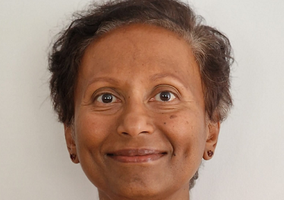
Jenkins (pictured), who has just been announced as the new chair of the National Trust, said: “The Act is quite clear – if you are going to call yourself a charity, you have to be a charity. Just because you save the state money somewhere else does not mean you are a charity – it might be kindness, but it is not charity.”
He went on to say that he had been a school governor in the past and recalled that the only thing the board was ever concerned with was moving up the league tables.
“The Charity Commission is perfectly right to open up this discussion,” he said. “Let’s ask schools what they do that is charitable. Some are doing very charitable things as a result – but if they don’t, I don’t see why they should get tax relief.”
ISC chair Dame Judith Mayhew Jonas began her evidence by saying education itself was still a charitable purpose, so independent schools already fulfilled that narrow requirement.
She then claimed most schools had been supporting their communities for centuries, and welcomed this opportunity to demonstrate what they do beyond their core activity of providing education.
But Dr Anthony Seldon, master at Wellington College, admitted the issue had provoked some resentment among schools because it was being assumed that they were only now starting to provide wider benefits to the public. “This is patronising at best; demeaning at worst,” he said.
Committee chair Dr Tony Wright MP asked Dame Judith whether she was confident that all public schools would pass the public benefit test, to which she replied: “Yes, they will.”
Wright admitted to being puzzled, because the Charity Commission guidance seemed to say that fee-charging charities must provide opportunities to people in poverty, and he understood that the independent schools sector was unhappy about that.
At this, Dame Judith said the ICS diagreed with the Charity Commission’s draft guidance, and would be scrutinising the final guidance closely to ensure it is “within the law”.
“The Charity Commission is a regulator, not a policy formulator,” she said, “and its regulation must be within the scope of the Act.”
Dr Seldon said he also disagreed with the Charity Commission’s suggestion that providing more bursaries might be one way of proving public benefit. “Bursaries are not a panacea,” he said. “They take out the brightest and the best from state schools and put them in independent schools, which seems to me to be depriving state schools of future leaders.”
He warned the Commission against defining public benefit too narrowly, and then launched into an impassioned spiel about the advantages of the public school system.
“Which sector is more successful – the 93 per cent that are state schools, or the 7 per cent that are independent? This sector is the world’s most successful sector of education – how British to try and damage that which is very successful, for unknown benefits for the other 93 per cent.”
Jenkins retorted that the word charity had to have clear meaning, and that simply being excellent at something did not equal charitable status. “Rolls Royce is an excellent car maker – does that mean it should get tax breaks?”
When challenged by a committee member: “What is wrong with elitism?”, Jenkins responded: “Nothing, but why should it be tax-deductible?”
Dame Judith resumed her evidence by asserting that independence was the key – “the schools we represent value their independence”.
To this, Wright responded: “If independence is the key, why are you so anxious to keep attaching yourself to the state through this subsidy? Some schools must be saying, ‘we don’t want to prove we provide public benefit to the poor, we just want to get on with the job’.”
Dame Judith said most schools couldn’t divest themselves of charitable status easily, even if they wanted to, because of the way their founding documents are set up.
Dame Judith was put on the spot by another committee member, who suggested it had been a “big mistake” for the ISC to appoint Rear Admiral Chris Parry as chief executive recently. Parry stepped down after just two months amid criticism that his military references and comments about the state school sector had made his position untenable.
Dame Judith refused to comment on Parry’s appointment or departure, but did admit she had been on his appointment panel.
B Radcliffe
Co secretary
Care Training Consortium
9 Jul 2008
How can public schools retain their charitable status?! They clearly are not providing charitable benefits for their communities. They are providing elite education for well-off people's children. I found it quite difficult to get our company accepted as a Scottish charity and yet we are not profit-making and provide care training for unemployed and disadvantaged people, also low- paid workers. All with the ultimate aim of helping vulnerable people to remain in their own homes as long as they may wish. In my opinion there should be no discussion.
Victoria
9 Jul 2008
Phillip - public schools ARE using the state's resources. For example who trained the teachers? Universities and colleges funded by the state, that's who. It is outrageous that public schools have charitable status. If they want to be truly independent then they should stop pilfering resources from the rest of us and calling them their own.
Government should promote donor tax breaks, say wealthy
Private schools, public benefit?
Charity Commission 'on collision course with judges', warns schools body
Public school raises fees to meet public benefit test
ISC appoints diplomat to chief's job
Nearly half of schools to offer more bursaries
Commission starts programme of public benefit assessments
Public benefit test for schools 'risks class war'
Independent schools encouraged to help state pupils get into university
Hind and Leather defend schools decision in letter to MPs
Independent schools must stay tax-free
Breathe in the dust and be more effective
Service-delivery charities will have to defend tax breaks, predicts ex-Commission policy chief
24 May 2012
Charities are being urged to abandon balloon releases in a Twitter a campaign.
23 May 2012
The Institute of Fundraising is to replace its 28 codes of fundraising practice with a single code and...
23 May 2012
A theatre company run by war veterans charity Stoll has partnered with the Royal Shakespeare Company Open...
24 May 2012
A consultation launched by the Department for Business, Innovation and Skills has been criticised for...
24 May 2012
Missing People is hoping to track down missing children using Twitter.
23 May 2012
A theatre company run by war veterans charity Stoll has partnered with the Royal Shakespeare Company Open...
24 May 2012
Charities are being urged to abandon balloon releases in a Twitter a campaign.
24 May 2012
Missing People is hoping to track down missing children using Twitter.
21 May 2012
Marie Curie Cancer Care has officially opened its new national support centre in Pontypool, Wales, creating...
15 Oct 2012
15 Oct 2012
15 Oct 2012
19 Nov 2012
Philip Anthony
Co-Operative Systems
9 Jul 2008
Most people would agree that public schools are not charities and many would agree that if people don't use the state's resources to educate their kids, they should get a tax break equal to what the state would pay, about £6,000 per annum per child.
If we could be honest and make this change then this public school/charity debate would disappear.
[Reply]