

Additionality concept still intact but practice is under review, says BIG
24 May 2013
The Big Lottery Fund has denied that its recent grants to Citizens Advice Bureaux and Home-start charities...
Sorry for interrupting, but there is something we need to tell you...
We use cookies to ensure that we give you the best experience on our website.
If you wish to restrict or block web browser cookies which are set on your device then you can do this through your browser settings, the Help function within your browser will tell you how.
The Cabinet Office is looking at appointing a commissioning specialist to improve contracting relationships with the voluntary sector, Lord Wallace revealed at the Civil Society Question Time event yesterday.
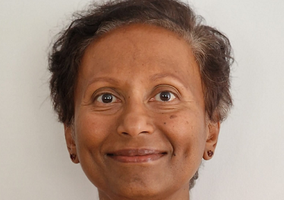
Responding to a question from Su Sayer, chief executive of United Response, on whether small charities are being put off taking on contracts due to nervousness over payment-by-results (PBR), Lord Wallace (pictured) advised that Francis Maude has been looking at retraining government procurement staff to be more inclusive towards smaller local organisations:
“There is a large issue behind all of this, that is the way central government deals with very local organisations," he said. "One of the things that Francis Maude has been looking at is how you train people within central government who are giving contracts to think about how local it is, because they all think it is much more efficient to do it at a large-scale regional level,” he said.
He went on to say that the Cabinet Office is also looking at appointing “another Crown representative whose job will be specifically to look at the contracting relationship with the voluntary sector to make sure that others do not ignore that dimension”.
Defending the government’s approach to the PBR model, Liberal peer Lord Wallace, who is the Cabinet Office spokesman in the House of Lords, said the coalition was “learning as we go along with this and it’s a process with a lot of experimentation which is going to have to go on”.
However Sayer remained unconvinced, responding that: “It’s still very, very scary. And so, even though we are quite a large organisation with a lot of staff, we are only taking on very, very, very tiny contracts and if we are, I dread to think how scary it is for smaller organisations.”
Panelists Lord Hodgson and NCVO chief Sir Stuart Etherington both identified cashflow as the main barrier for charities in the PBR model and mooted social investment as a solution. Hodgson, however, highlighted the bureaucratic barriers that will be faced in relying on this to improve matters for smaller charities:
“I think payment-by-results, unless done in consortia, may present a challenge to smaller charities,” said Hodgson. “There are of course opportunities if we are able to find ways to develop social investment and mixed-purpose investment which will require changes from the Ministry of Justice, and changes in the Financial Services Authority. It is quite a number of pieces on the chess board that need to be moved which could perhaps help smaller charities bridge that cashflow gap, but I think just straight off many charities will find it hard to do that because of the time between starting the work and getting paid for the results.”
Susanne Rauprich, chief executive of the National Council for Voluntary Youth Service, said that the public service delivery agenda and that of the Big Society "do not easily mix". She advised from the audience that there are many organisations which would not be able to embrace social finance options to get to the position that they could take part in PBR contracts but have a lot to offer in terms of finding solutions for their young beneficiaries.
"Unless we bridge the gap between the Big Society-type organisations and the public service contract-type organsations we will never find a solution," she said.
Lesley-Anne Alexander, chair of Acevo and chief executive of RNIB, said the panel was missing a key point in its discussion of PBR, that of risk-sharing.
"Charities work with the most marginalised communities," she said. "I don't know if any of you have ever tried to persuade an employer to get a blind person on their payroll - it's blooming difficult work," she said. "What we need in the contracting environment is the recognition of risk-sharing and not simply offloading risk on to what happens to be a very willing voluntary sector."
Hilary Barnard
Principal Consultant
HBMC
17 May 2012
It is very strange that Lord Wallace thinks he can fob a third sector audience with a statement that the coalition government is “learning as we go along with this [payment by results] and it’s a process with a lot of experimentation which is going to have to go on”.
Is he suggesting that Ministers are slow learners when confronted with evidence of all the problems being thrown up by payment by results for small and medium sized third sector organisations?
Why should the experiment continue in its present form once the evidence is confronted?
Carl Allen
18 May 2012
Response to [Hilary Barnard]
It is more than time for the charity sector to accept and properly respond to what the historical evidence shows i.e. government ministers have SEN needs (SEN being special education needs).
24 May 2013
The Big Lottery Fund has denied that its recent grants to Citizens Advice Bureaux and Home-start charities...
24 May 2013
The brutal murder of soldier Lee Rigby this week has led to a sharp rise in donations to Help for Heroes...
22 May 2013
Shadow minister for civil society Gareth Thomas has tabled a series of Parliamentary questions to minister...
24 May 2013
The Scottish Council of Voluntary Organisations has criticised the Scottish regulator, OSCR, for stepping...
24 May 2013
Acevo chief executive Sir Stephen Bubb has said the Charity Commission will have to get better at regulating...
24 May 2013
The chief executive of Barnardo’s Anne Marie Carrie will leave the children’s charity next month after...
24 May 2013
The Charity Commission launched its new website today, and hopes that the improvements will make it easier...
22 May 2013
Google has shortlisted ten UK charities which stand the chance of winning £500,000 as part of its Global...
20 May 2013
Your CivilSociety rounds-up the most read stories from the previous week.
29 Oct 2013
29 Oct 2013
29 Oct 2013
27 Nov 2013
Lance Clarke
CEO
Unnamed charity
20 Dec 2012
Some time ago I spent time recording the views of others in my sector re the activities of councillors and their procurement departments - my conclusion is that there is an enormous muddle, fraught with competing agendas, now significantly worsened by the recessionary cost cutting. These factors, coupled with a general lack of proper procurement training in some councils has made life difficult; moreover, the thought that govt can restrain local council procurement officers is laughable, COMPACT is a case in point. I read about: opportunities, social investment and so on - Commissioners often pick up these buzz-words without a clue as to what they mean or how to properly introduce them, relying on them as they do as good sound-bites. We face call-off contracting for specialist services (a kind of PBR) and the notion that our charity should '50:50 risk-share'. There is no, and will be no effective ombudsman, there will be no restraint and many good charities will suffer. Contracts are not the right vehicles to innovate. As a footnote, if local councils could only be encouraged to talk with the Third Sector as partners. Then, together, we could work towards innovative solutions that deliver services, to more people and at less cost, rather than spending money on wasteful bureaucracy. This is a late post and will probably not even get looked at.
[Reply]