

Share

Voluntary sector is 'failing its women'

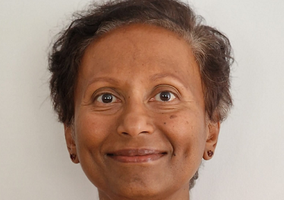
Rowena Lewis, fellow, Clore Social Leadership Programme
News

Voluntary sector is 'failing its women' 7

Governance | Tania Mason | 26 Jan 2012

Seven in ten voluntary sector employees are female, yet just over four in ten charities are led by female CEOs or chairs. And in charities with turnover of £10m or more, women are in the top jobs at just 27 per cent of them.

These are just two of the damning statistics contained in Rowena Lewis’s explosive new report, the culmination of her research into women leaders in the sector as part of her Clore Social Fellowship.  Lewis analysed a number of existing surveys, Charity Commission data on 1,106 charities and conducted in-depth interviews with 22 women leaders to arrive at her conclusions.

In the report, Close to Parity: challenging the voluntary sector to smash the glass ceiling, Lewis concedes that women in the sector are closer to gender equality than their counterparts in either the public or private sectors, but they are still “not making it into leadership in the numbers we would expect”:

“Far from being close to parity, voluntary sector women face a ‘reinforced glass ceiling, one where the 68 per cent of female employees and 59 per cent of senior managers are simply not progressing into leadership in the numbers we might expect.”

She concludes: “The voluntary sector prides itself on its commitment to pursuing social justice and tackling inequality, but it is failing its women.”

As well as women’s under-representation in leadership positions, the report highlights the disparity in pay for men and women doing similar jobs. It quotes Acevo’s recent research that revealed an overall gap of 16 per cent between the salaries of male and female chief executives, and showing that this gap rises to 18 per cent in the top 100 charities.

This gap is all the more insidious, Lewis said, for the fact that women in the sector don’t even know it exists.

The report also cites women’s experiences of discrimination at the hands of their male colleagues, such as instances of feeling undermined, facing stereotypes, feeling invisible and being sexually harassed.

Lewis concludes the report by issuing a challenge to various parts of the sector to take action to raise awareness of these inequalities and take action to address them. Umbrella bodies are urged to track trends and champion women’s equality; boards and recruitment agencies to offer more flexible senior roles and ensured CEOs are paid fairly, and for women to stand up for themselves and demand proper pay and recognition.

Katy McCormick
Head of Development
Margaret Carey Foundation
27 Jan 2012

I hardly think ACEVO's chair Lesley-Anne Alexander helps by claiming that we need to "move on from the bra-burning debate" (see article: Acevo chair: equality debate 'must move on from bra-burning') -- as if that is actually an issue! Acting to polarise the women's movement by trying to frame the activists as "over zealous" and "bra-burning" is completely out of line. All too often women aren't judged on their merits because boardrooms are a closed shop where white men invite other white men to join. And the voluntary sector is not immune to this - even with the best will in the world, there is still too much gender imbalance on boards and at executive level. And if we are afraid to campaign for change, because we fear being branded "strident feminists" then progress will continue to come at a snail's pace.

Stephen Lulsley
Independent Commentator and Consultant
31 Jan 2012
Response to [Katy McCormick]

As I have said before, Lesley-Anne Alexander and many other women have reached the top job, thus disproving the argument that there is a glass ceiling for women.

Furthermore, I find Katy McCormick's argument that there is some kind of 'employment apartheid' operating "where white men invite other white men to join", deeply insulting and offensive.

In 40 years of employment, in industry and in the Third Sector, I have worked with loads of women senior managers and in some cases CEOs and not only am I happy to do so where they are competent and qualified, but am also happy to promote them and appoint them myself, if the occasion arises.

Margaret Gardner
Marketing and Communications Director
Practical Action
27 Jan 2012

Quite shocked at some of the responses to what seems to me to be a well-researched and thoughtful article. As voluntary organisations/NGOs the majority of our supporters and in many cases beneficiaries will be women. Shouldn’t we really consider thoughtfully whether there is an issue here that needs to be addressed.
I have chaired a small social enterprise, been Vice Chair of a large sector network and been a trustee. I work as a director in a mid-sized NGO (£30 million turnover). Do I think that there are issues of discrimination or bias in the sector – yes, do I think that they are out of kilter with what’s going on in the rest of society no. But for us that shouldn’t be good enough. Part of our remit is to challenge and change.
Personally I would start with boards, the culture and behaviour set there models what happens elsewhere in organisations. If a board isn’t properly representative of society and its narrower constituency then it risks taking poorly informed decisions.
I recently listened to Virginia Bottomley talking about the issue of women on boards – her take, as I heard it, was that a major problem is that boards are self-selecting (preferring people they know already) and that this is one of the key reasons change is slow.
I am not proud of having only taken 10 weeks maternity leave – but as a mother please don’t tell me that the issue with women is that they just leave to have kids

Melanie Jeffs
Centre Manager
Nottingham Women's Centre
27 Jan 2012

I don't think the issue here is simply about paid staff - the composition of trustee boards should also be looked at. It's easy to make the argument that women often leave to have a family but a trustee role is generally a voluntary position so why do women still only make up 40% of trustees and only 35% of chairs?

Is there an argument that better female representation on Boards trickles down to promote women into senior staff positions? I don't think this is uncovered in the report but from my own knowledge and experience I'd guess that there are less women on the Boards of major charities, mirroring the findings that women are less likely to find themselves in a senior position in these organisations but are likely to lead as volunteers in small, local charities.

In terms of "constant drumming of the feminist drum and silly tiresome reports" - I think this is unjustified and indicates that the commentator probably hasn't looked at the report. What is actually being said is that things aren't too bad - we've got plenty to be proud of. But there is still a way to go so let's have a proper look at the conditions that contribute to this so that we can ensure that women have an equal chance of making it to the top positions in a sector in which women outweigh men in the workforce generally.

Stephen Lulsley
Independent Commentator and Consultant
27 Jan 2012
Response to [Melanie Jeffs]

Dear Melanie
I wanted to reply more fully but I couldn't summon up the energy ...

I will only say that I have sat on many boards as executive and non-exec, often as Chair over the last 30 years and woman have nearly always been there in equal numbers or near enough.

My current board has 2 men and 2 women. We are likely to be appointing another soon; the best candidate is a woman. Then we will have 60% women and 40% men? Are the men complaining? No.

We believe the cream rises to the top, whatever the gender.QED.

Stephen Lulsley
Independent Commentator, Consultant and Chief Executive
26 Jan 2012

Equal pay for equal responsibility - I agree.
Equal opportunity - I agree.
Women in Senior Management and as CEOs, if they have equal or better skills than the male candidates - I agree.

Positive discrimination or quotas to get the numbers up - NO!

My Head of Finance and I are male; all my other team members are women, some obviously, as the remainder are all women, in senior roles.

I have employed hundreds of people in 40 odd years of management and two senior women I have now are in the top three people, of either gender, that I have ever employed. Arguably, the other top three slot probably belongs to a woman I employed and nurtured through the ranks into a senior role some 30 years ago or so.

My succession planning if it goes to plan is that when I retire, the two I mentined above will become CEO and Deputy CEO respectively rather than bringing anyone in from outside, if I have my way.

What worries me is that they rather than me could leave at, or before the critical point of promotion to the top jobs, to have a family, and my plans for them and our organisation will get shot to pieces.

Just to prove my point though, I attended a meeting of CEOs yesterday and a good number, perhaps even a majority present, were women including some in very top, top third sector roles.

Dare I suggest therefore, without being accused of being sexist, that the reason there are not more in top jobs is because at the age when that might be where they have reached that opportunity and experience, or perhaps before, they have chosen to leave to have families?

Unfortunately, so far, nobody has yet discovered a way that men can carry and bear children. Speaking of which though, I have several friends who are house husbands and stay at home fathers because their spouses have high powered jobs in law, commerce and the third sector; they don't have a problem with that and neither do I.

However, when I came, there was a woman here who was asked if she wanted the top job before I was recruited, but she said no, then she left ... to get married and start a family.

However, if a woman wants to stay on, develop her career and go for the top job, let's give her equal opportunity and equal pay but recognise the reality and the choice that some women make at a certain point and that might have something to do with why there are less in those top roles.

This constant drumming of the feminist drum and silly tiresome reports (we've heard it all before) does a disservice to the women who do strive and prove that they are as every bit as good if not better than their male counterparts. It is them I salute, not the ones who carp on all the time about their own failure to get to the top and blame it on male prejudice, glass ceilings and the like.


Lileth O'Reilly
26 Jan 2012

"...for women to stand up for themselves and demand proper pay and recognition".

I'm not saying it's easy being a woman at the workplace, it's not. However, women didn't get the vote by sitting around waiting for someone to give it to them, it was fought for. We need to revive this fighting spirit and there needs to be a bit more action rather than sitting around complaining that life isn't fair. Because life isn't fair but we have it better here than in other countries. If you don't get the top job at your charity or company then challenge your board/employer or move somewhere else. Don't hang around complaining as that definitely won't get you anywhere. Or, if all else fails, set up your own organisation and make yourself CEO - like men do, every day.

Comments

[Cancel] | Reply to:

Close »

Community Standards

The civilsociety.co.uk community and comments board is intended as a platform for informed and civilised debate.

We hope to encourage a broad range of views, however, there are standards that we expect commentators to uphold. We reserve the right to delete or amend any comments that do not adhere to these standards.

We welcome:

  • Robust but respectful debate
  • Strongly held opinions
  • Intelligent relevant discussion
  • The sharing of relevant experiences
  • New participants

We will not publish:

  • Rude, threatening, offensive, obscene or abusive language, or links to such material
  • Links to commercial organisations or spam postings. The comments board is not an advertising platform
  • The posting of contact details for yourself or others
  • Comments intended for malicious purpose or mindless abuse
  • Comments purporting to be from another person or organisation under false pretences
  • Gratuitous criticism, commentary or self-promotion
  • Any material which breaches copyright or privacy laws, or could be considered libellous
  • The use of the comments board for the pursuit or extension of personal disputes

Be aware:

  • Views expressed on the comments board are left at users’ discretion and are in no way views held or supported by Civil Society Media
  • Comments left by others may not be accurate, do not rely on them as fact
  • You may be misunderstood - sarcasm and humour can easily be taken out of context, try to be clear

Please:

  • Enjoy the opportunity to express your opinion and respect the right of others to express theirs
  • Confine your remarks to issues rather than personalities

Together we can keep our community a polite, respectful and intelligent platform for discussion.

emailalert

28 codes of fundraising practice to be condensed into one

23 May 2012

The Institute of Fundraising is to replace its 28 codes of fundraising practice with a single code and...

Royal Shakespeare Company collaborates with war veterans charity

23 May 2012

A theatre company run by war veterans charity Stoll has partnered with the Royal Shakespeare Company Open...

Public thinks volunteers more worthy of honours than charity professionals

23 May 2012

New research released by nfpSynergy claims that almost half the British public think that voluntary sector...

BIS consultation on volunteer-led events criticised

24 May 2012

A consultation launched by the Department of Business Innovation and Sport has been criticised for its...

Royal Shakespeare Company collaborates with war veterans charity

23 May 2012

A theatre company run by war veterans charity Stoll has partnered with the Royal Shakespeare Company Open...

Risk guide launched for charities going through structural changes

23 May 2012

Charity insurance specialist Ecclesiastical has published a risk guide for charities which are undertaking...

Marie Curie opens national support centre and adds 140 staff

21 May 2012

Marie Curie Cancer Care has officially opened its new national support centre in Pontypool, Wales, creating...

Marketers voice concerns over email conversion rates

21 May 2012

Conversion rates are the biggest concern for nearly half of all email marketers surveyed by the Direct...

Samsung launches Olympics app to fundraise for Kids Company

16 May 2012

Samsung has launched the Hope Relay mobile app to raise money for three charities including Kids Company,...

Join the discussion

 Twitter button

@CSFinance