
28 codes of fundraising practice to be condensed into one
23 May 2012
The Institute of Fundraising is to replace its 28 codes of fundraising practice with a single code and...
The implementation of the new legal form Charitable Incorporated Organisation is not now expected until the first quarter of next year.
And according to law firm Bates Wells and Braithwaite, the proposal to limit availability of CIOs to new charities means the CIO will not initially be available for unincorporated charities wishing to convert.
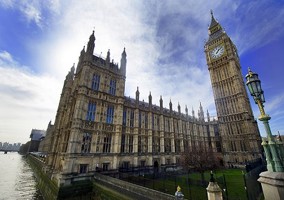
The new timescale was confirmed by minister for civil society Nick Hurd in Parliament on Monday in response to a question from Conservative MP Jackie Doyle-Price about when the CIO structure would be announced.
Hurd replied: “The draft secondary legislation needed to complete the legal framework for the Charitable Incorporated Organisation is currently being finalised. This is taking longer than expected, as there have been some complex issues to resolve on the insolvency and dissolution regime for CIOs.
“Subject to parliamentary approval, implementation is now expected to start in early 2012. Implementation will have to be phased to help the Charity Commission manage anticipated demand. An announcement will be made in due course.”
Christine Rigby, a solicitor at BWB, added that she had had word from the Cabinet Office that pressures on the Charity Commission would mean that only brand new charities would be able to register as CIOs at first. Those unincorporated charities that want to become CIOs may have to wait so that the regulator is not overwhelmed with applications.
Progress on the CIO has been slow since it was mooted in the Charities Act 2006. In 2008, the Commission opened a consultation on two sets of draft regulations to implement the CIO, together with model documentation. The responses to this consultation raised several significant difficulties and concerns and suggested numerous improvements to the regulations and models.
Things have moved faster in Scotland, where the regulator began registering new CIOs in April.
Click here for a more detailed explanation of the CIO’s progress to date.
23 May 2012
The Institute of Fundraising is to replace its 28 codes of fundraising practice with a single code and...
23 May 2012
A theatre company run by war veterans charity Stoll has partnered with the Royal Shakespeare Company Open...
23 May 2012
New research released by nfpSynergy claims that almost half the British public think that voluntary sector...
23 May 2012
A theatre company run by war veterans charity Stoll has partnered with the Royal Shakespeare Company Open...
23 May 2012
Charity insurance specialist Ecclesiastical has published a risk guide for charities which are undertaking...
23 May 2012
The Disasters Emergency Committee has appointed Saleh Saeed as chief executive to take over when current...
21 May 2012
Marie Curie Cancer Care has officially opened its new national support centre in Pontypool, Wales, creating...
21 May 2012
Conversion rates are the biggest concern for nearly half of all email marketers surveyed by the Direct...
16 May 2012
Samsung has launched the Hope Relay mobile app to raise money for three charities including Kids Company,...
15 Oct 2012
15 Oct 2012
15 Oct 2012
19 Nov 2012
DAVID ROBSON, BEM, BA Hons. [Social Policy]
Trustee
York Blind and Partially Sighted Society
8 Nov 2011
Charities are being called upon to provide more to local communities, while funding from central government and local authorities is being cut dramatically. A charity like mine relies heavily on paid staff to deliver services, monies to pay for this increasingly more difficult to raise.
As a trustee faced by funding cuts, to avoid an overspend, I am not going to do anything which puts me personally at risk of financial jeopardy, and so will authorise a cut in service provision. Therefore, the losers are the very people the charity exists to serve, predominatly the elderly who suffer from partial or total loss of vision.
Making existing charities having to wait an indeterminate time for the legislation to be [a] introduced, and [b] to include them is not a satisfactory situation, and should be resolved quickly - or do you want us all to become limited companies, and if so the relevant government minister should make that explicit.
[Reply]